Feeds:
Posts
Comments

It’s been 62 years since my dad and I spent our first Father’s Day together. I was tiny, red-headed, and precocious (I started walking at 7 months, yes, that’s the truth, several witnesses who weren’t even related to me swear it’s so!) and Daddy was tall and handsome and strong, with jet black hair and high cheekbones proclaiming his Choctaw heritage.

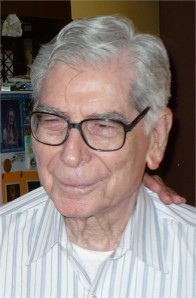
Now I am big and my knees have gotten a bit wobbly again, and my red hair has turned to dark brown with a few artful silver streaks. My dad’s hair is now a beautiful silver, but at 88, after years of hard work as a farm boy and a sailor who went to war, he’s no longer tall and strong, and he has finally admitted he can’t do what he used to. He walks with a cane, and uses his handicapped hang tag even when Mother’s not in the car. He forgets things, but never people, never us, especially not Mother.

We spent this Father’s Day at the hospital in Dallas, watching over Mother as she struggled to breath, lungs filled with fluid, trying to tell us between gasps for air that she was fine now and wanted to go home. When I got the call Friday morning, I left Houston not knowing if she would still be with us when I got there, but somehow she made it through yet another crisis. Each time I left the hospital, she’d tell me “Don’t let your daddy come back with you, he’s too weak and shaky, make him stay home and rest.” Well, my silver-haired daddy is weak in body, but not in spirit, and I wasn’t able to sneak away without him one single time. I told her “he’s going to keep trying to take care of you as long as he can stand up and walk, and maybe even after that.”

“I know, but I worry.” She worries, because he does forget things, and he stumbles, and his trips to the grocery store 4 blocks away sometimes take 3 hours. After spending all these years taking care of others, he is finding it hard to let go.

They have not had a perfect marriage – there were some rough times among the almost 65 years they’ve spent together – but in these last “Golden” years they have become an inseparable unit. I do know my dad has been in love with Mother since he first saw her eighty years ago, and he’s never stopped. I suspect Mother never stopped grieving for her first love, lost in the war, but she made a good home for all of us, and now she can’t imagine being without Dad.

We made our final visit to Mother at the hospital and I dropped Daddy off at home. As I drove away, he stood in the yard waving goodbye, his silver hair shining in the hot Texas sun. I knew in a few hours he’d hobble out to his car, drive back to the hospital, and sit, mostly dozing, by Mother’s side until the sun began to set. Tomorrow he’d go back again, and the next day, and the next, as long as his legs will carry him, he will be there at her side. He’s a good man, that silver-haired daddy of mine.

My father

My father

I went to a writing/yoga retreat near Belton (Texas, for my Yankee friends) last week , met some great people, made a few pitiful attempts to re-start my long-lost yoga skills, and did some inpsired writing.

Before I went, my friend Robert asked me why it’s never called a “yoga advance.” My witty answer – “er, uh, because we can’t advance until we retreat and get ourselves together?” I thought about that question and realized, by the end of the session, I’d said a true thing. My zest for writing has been flagging, and I needed something to get the creative juices flowing again. The Universe, as it is wont to do, lead me to just the right place.

I learned about Patricia Lee Lewis and her writing/yoga workshops by accident (do I hear someone say “there are no accidents?”) Someone on my writing listserv posted a link to a retreat in Wales, wistfully saying it would be great to go to something like that. I clicked on the link, and low and behold, I said to myself – I KNOW that place, I saw the house at the top of the hill when my Welsh friend Steve Jones took me and my half-sister Gwen to visit St. Non’s Chapel. St. Non was the mother of St. David, patron saint of Wales, and St Davids is the city near Carn Llidi where Gwen’s father died in a plane crash in June, 1943. I knew I couldn’t afford another trip to Wales, but I decided to write Patricia and tell her about our story. Somehow I felt she’d want to know.

St. Non's Chapel, Wales

St. Non's Chapel, Wales

I got an e-mail from her that said, in part, “when I read that he (Gwen’s father) was from Comanche, I wept. My grandparents were from Comanche.” That was only one of many coincidence we shared, and we both knew we had to meet. When she said she and Charles MacInerney (yoga teacher) were holding a retreat at Belton I was elated. Belton fits the budget. It is also the town where my great-great grandparents, Elisha E. and Ruth Wilkinson Stewart, were pioneers in the Republic of Texas days, and I knew it fairly well. In no time at all, my credit card was in my hand and the arrangements were made.

Some of you may not believe it, but I am a very shy person, and going into new situations where I don’t know anybody usually scares me out of my wits. This time, I had no fear at all. I knew I was going to were I needed to be, where I belonged.

By the end of the first evening, we all pretty much felt like friends, and we were ready to learn and have fun doing it. Patricia has a gentle teaching style, developed in part by her experience in grade school with a teacher whose cruel comment crushed her joy in writing for years. She had written what she thought (and what was) an excellent story. The teacher wrote on the paper “did you really write this?” When Patricia figured out the teacher doubted that she could have written such a fine piece of work, she was deeply hurt.

Our writing exercises, always started with a little meditation and a prompt of some kind, were read aloud to our group. All stories were treated as fiction, all comments were about what was good. I read my efforts without my usual crippling fear that someone would make fun of it, or say something cutting – things that have happened in writing groups before. And the writing – as soon as the group leader said “go”, I’d put my pen to the paper and the words would flow, with no effort on my part. Some of the stuff came totally out of the blue, like my poem about sleeping with the pool boy, and some of it, I realized, came from deep inside where it had been waiting for me to bring it to life.

By the end of our four days together, I knew I’d been through something important and extraordinary, and met new friends who will go on to become old friends. Joel, you dog, you, you make me grin! And Doris, my friend from lifetimes past. Drew and Elizabeth, it just melted my heart to see the two of you sitting on the park bench reading MY story aloud to each other! Madeline, you are one fine cook. Bonnie, you are a dear. Lisa, come on over to Rice and we’ll do lunch. Charles, you can teach me yoga any time and I just might learn to love it again. To all of you, and especially dear, long lost sister Patricia, thanks for being you.

Here’s the link to Patricia’s website:

http://www.writingretreats.org/About/

and here’s the one to the retreat in Wales. The photo is of St. Davids Cathedral, and in the far right background you can see part of Carn Llidi. Patricia has promised to take her class on a pilgrimage to see the memorial to Lt. Robertson and his 3 fellow crew members, and their story will live on.

http://www.writingretreats.org/Retreats/International/index.html

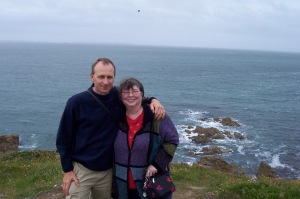
Here is a photo of my Welsh friend near the retreat center:

Steve Jones and Shirley Wetzel in Wales

Steve Jones and Shirley Wetzel in Wales

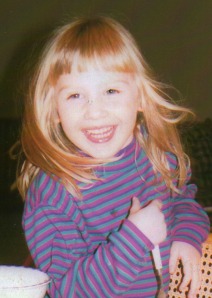
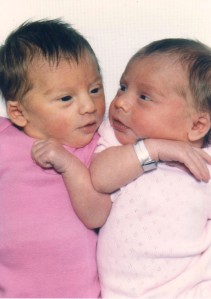
In my last post, I mentioned my granddaughters, remembering them as babies rolling in the bluebonnets. I also mentioned Comanche, and posted part of my novel in process. That made me think of writers I have met, like Kinky Friedman, who has a small cameo in the book, and Earl Staggs, because he is a great friend of my dear friend Kaye B., and Jeff Cohen, who I first “met” online because of our mutual interest in autism, who writes some of the funniest mysteries around, and Chris Grabenstein because he writes a series about two wonderful characters who protect a small town on the Jersey shore, as well as a darker series about an FBI agent and another series for kids, and I happen to have pictures of all of them on my latest photo cd – I HATE to delete my special photos. So this seemed a good time to post some of those photos. Here goes.

Amber of the Jungle

Amber of the Jungle

Autumn the Hilarious

Autumn the Hilarious

Earl Darlin' and me

Earl Darlin' and me

Chris Grabenstein and me again

Chris Grabenstein and me again

Jeff Cohen and still me

Jeff Cohen and still me

The Next Governor of Texas

The Next Governor of Texas

Kinky Friedman and me in a choke hold - but he really does like me

Kinky Friedman and me in a choke hold - but he really does like me

Kinky's Right- or is it Left?-Hand man Jeff Shelby

Kinky's Right- or is it Left?-Hand man Jeff Shelby

Comanche County Courthouse

Comanche County Courthouse

Saloon where John Wesley Hardin shot the sheriff of Brown County, but he did not shot the deputy

Saloon where John Wesley Hardin shot the sheriff of Brown County, but he did not shoot the deputy

Last Saturday I traveled out to the countryside with some friends for the Annual Viewing of the Bluebonnets, and a good time was had by all. This is a Texas ritual to celebrate our all-too-brief spring season. Families pile into their minivans and SUVs and drive toward Austin or San Antonio to view the marvel of the wild flowers. On every country lane, cars line the roadside as families and young lovers pose in the fields of blue for the obligatory photos. It’s a fine time of the year, celebrated by poets and writers like J. Frank Dobie, who said that “no other flower—for me at least—brings such upsurging of the spirit and at the same time such restfulness.”

I, too, have stacks of photos of frolic among the bluebonnets — with my first love, in my college days, with my new husband, later with our sons as they grew from babies to young men with loves of their own, and later still with tiny baby girls in bright sundresses …

Here’s me in the bluebonnets

Somewhere near Brenham

Somewhere near Brenham

and there are some nice pix on Wikipedia http://en.wikipedia.org/wiki/Bluebonnet#Gallery

and you can find plenty of bluebonnet photos on Google

Here’s the second chapter of my Eternal Work in Progress, A Death in Comanche, which expresses my own feelings about this time of year. Enjoy.

I ambled north on State Highway 36, breathing in the beauty of the late spring day. The fields were covered in bluebonnets, interspersed with bright patches of scarlet, pink and yellow, Indian Paintbrush, buttercups, Texas primrose. The soft breeze sent ripples through the flowers like waves on a vast inland sea. It is the time, as A.L. Morgan put it, “when the sky falls on Texas.”

It’s a common misconception that Texas, at least the southern half, doesn’t have four seasons. That’s wrong. Our Fall Leaf changes every year around Thanksgiving, and winter usually shows up for a day or two in late January. Sometimes the temperature plummets to below 32 degrees. The rest of the time it’s summer, except for a few weeks in March and April when the temperature is perfect, the humidity is low, and every roadside, yard and vacant lot is covered in a riot of flowers both wild and tame. For that brief time, Texas is Heaven.

General Phil Sheridan, Military Governor of Texas after the Late Unpleasantness, is reported to have said, “If I owned both Hell and Texas, I’d live in Hell and rent out Texas.” A good many Texans wished he’d done so, but that’s another story. Even General Phil might’ve liked Texas if he’d gone there when the bluebonnets were in bloom.

Me, I love it. It’s my favorite time of the year, when the world renews itself and Mother Nature puts on a fine show. I felt that I, too, was beginning again. Highway 36 was my yellow brick road from an unhappy, turbulent past to a tranquil, worry-free future in the town where I was born. The best-laid plans …

Fabulous Blog Award

My dear, dear sweet friend Kaye Barley gave me this award today!

Here are my favorite Fabulous Bloggers:
1. http://cousinnancy.blogspot.com/
2. http://meanderingsandmuses.blogspot.com/
3. http://billcrider.blogspot.com/
4. http://www.fourdogmom.blogspot.com/
5. http://heydeadguy.typepad.com/heydeadguy/

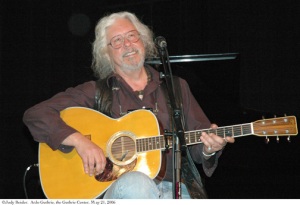
5 addictions: 1. Blue Bell Ice Cream 2. Chocolate in any form 3. All my Facebook friends 4. Arlo Guthrie – his music, his family, his Blunderite fans, and his self 5. reading

Fabulous Blog Award

Death and Taxes

Nothing is inevitable, as they say, except death and taxes. We all pay our taxes to support our democratic government, right? Well, apparently everyone may get taxed, but if you’re high enough above the huddled masses you may get away with not paying them – unless you get picked for a top government post.

Enough of politics, what I really came here to talk about is the one part of life that IS inevitable – death comes to us all. One drawback to getting older is that many of our friends and loved ones, as Kinky Friedman so poetically puts it, start “stepping on a rainbow.” I’m not for sure about what happens to them after that, but I’d like to think they go to a very nice place and reunite with everyone they’ve ever loved, including their dogs and cats and other assorted pets, except snakes. I HATE snakes. And all the pain and all the regret and all the unfinished business they had on earth will be forgotten.

Why this gloomy topic, you ask? Let me tell you — In the last 2 months I lost two people who were very dear to me, and I’ve been wondering where they are now and if they’re okay. They were two very different people, but they were both part of my family – one by birth and one by choice.

I met Dennis Lachappelle almost 20 years ago in an Indian restaurant in NYC. A group of people who were mostly strangers to each other had gone to Europe with Arlo Guthrie, who wanted to avoid the hype and commercialism of the 20th anniversary of Woodstock, and we were having a reunion at Arlo’s Thanksgiving show at Carnegie Hall. Arlo treated us all to dinner after the show, and I saw Dennis sitting by himself, looking kinda lonely and shy. That’s the last time I’d ever think of him as shy. He was Arlo’s bus driver for many years, and he and some of the people from the trip and people we met later at Arlo gigs truly did become family – complete with feuds and fusses like all families, but with lots of love too. At one of Arlo’s October concerts at the old church in Great Barrington, he said that a lot of people in the audience had started out coming to the concerts to see him, but now we came to see each other and he was secondary to our get togethers. He was right.

Dennis was a part of our family, even after he stopped driving the big red bus and started working for the state, driving snowplows in the winter. He always had a big smile and a bear hug for us; he rarely got angry, and when he did, he exploded for a brief moment, then got over it in an even briefer moment. He’d always wanted a family, and children, and he finally got that wish a few years ago when Deb “Fitzi” Fitzgerald came into his life. They were married at the old church last summer, with Arlo performing the ceremony. It should have been the beginning of a beautiful life – they should have had many more years together – but one evening in early December, after driving the snowplow almost 24/7 for days, he called his boss and said he wasn’t feeling too well. He never made it home – a co-worker found his truck at the side of the road, and called for an ambulance. Dennis died in the hospital, his big heart worn out trying to help others. He was that kind of guy.

Mary Hart, my first cousin, was a gentle soul, quiet but determined and resourceful. Her mother was many years older than mine, and she was 13 years older then me, so I didn’t know her as well as the cousins more my age, but when I started getting interested in our family genealogy she was right there to offer me all the help I could ask for. She’d worked in big cities, Dallas & Houston, until they just got too big for her, and she returned to our hometown, Comanche, Texas. She started helping out at the library, and before too long she had become a vital member of the staff. About a year ago, after feeling bad for a long time – she never liked to make a fuss – she went to the doctor and found out she had advanced lung cancer – no, she wasn’t a smoker. She called her brother to get her house ready to sell, put all her affairs in order- that was easy, she was always orderly, and checked into the hospital. She went into hospice care a few months later. When we visited her, she was matter of fact, upbeat, ready to go, and made us promise there would be no funeral, no memorial service, no hoopla after she was gone.

I’ve become friends with the Comanche librarian, Margaret Waring, who loved Mary like a sister. She said Mary left a note for her friends and family that said:

“Message from Mary: I love you all, AND NOW I FLY!”

When I started this post, I didn’t realize I might be closer to taking flight than I’d thought I was. My doctor had some tests run, and it seems I have a heart problem. It’s something that can be managed and treated without any drastic measures, but still …

Songs about flying:

I’ll fly away

Don Conoscenti – go to the right side & click on The Other Side:

http://profile.myspace.com/index.cfm?fuseaction=user.viewprofile&friendid=16775309

Poems about flying:

High Flight

By Pilot Officer John G. Magee Jr.

“Oh! I have slipped the surly bonds of earth

And danced the skies on laughter-silvered wings …

Goodbye, dear Dennis, sweet Mary, I hope you are flying high now. As Arlo Guthrie’s song goes, My old friend, I’ll see you again … now you’re just around the bend, my old friend

And I will see all those dear to me … when it’s time for me to take wing and join them

Welcome home, soldier

Taylor's Chapel, Comanche County, Texas

Taylor's Chapel

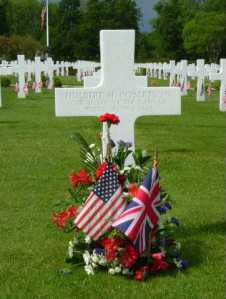
November 11, 2008: on a bright, sunny day, friends and relatives of 2nd Lt. Hulbert H. Robertson came to the little country cemetery at Taylor’s Chapel, near Comanche, Texas, to honor one of their own. In one of my early posts, “Gone but never forgotten,” I told the story of how my half sister Gwen and I went to England and Wales to visit her father’s grave at the Cambridge American Cemetery, and to see the mountain in Wales where he and three other crew members died on 4 June, 1943. Our mother had known little about the circumstances of his death, until the day Steve Jones came into our lives. Steve, a Welsh firefighter, hang-glider, mountain climber, scuba diver, aviation historian, and one of the world’s nicest young men, wanted to honor the Americans who died in accidents in Wales during WWII. He studied and researched and contacted family members to share what he’d learned. Gwen and I took two trips to the UK, first in March 2004, and again in June 2005. Steve and his lovely companion, Sabina, took excellent care of us. In 2005, Steve arranged a memorial service for the crew members near Carn Llidi, the site of the crash.

Fast forward to 2008. Mother had always had a wish to put a memorial to Hulbert in the cemetery where his parents, grandparents, and other family members rest. Mother is now 87 years old, so we knew the time had come to fulfill that wish. The monument was purchased, and we put together a program for Memorial Day. Various problems and delays caused several postponements of the ceremony, and those planning to go probably began to wonder if it would ever happen. Then it did, and everything turned out just fine.

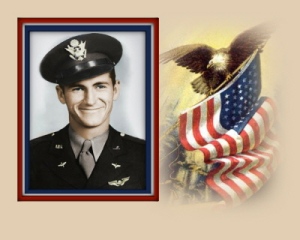
Our cousins Beth and Sharon set up a table for the scrapbook of the trips to the UK, the box with the flag from Hulbert’s funeral and his insignia, and a small blue tin with pieces of the aircraft and a rock Gwen and I had gathered on Carn Llidi, along with a copy of the story. We placed flowers on the marker, and I put an American flag on one side of it and a Welsh flag on the other. The stage was set, and it was time for the next part. Because I know how to research and write and speak (reluctantly) in public, I was chosen to do the talking. I didn’t know what I was going to say, but I opened my mouth and the words came easily. I talked about his early years, his family – he was the baby of a very large family, and they all adored him — and his desire to serve his country. He was, to all accounts, a brilliant young man, and he applied to West Point. He met all the criteria, but the slots alloted for his county had already been filled. He decided he and Mother should just go ahead and get married, and they did, at the Robertson’s old dog trot cabin. Shortly after the wedding, a letter of acceptance to the Naval Academy arrived, but married men aren’t eligible to attend. Mother says he didn’t care, he wanted to fly, and that’s what he did, first as an enlisted man, then as a 2nd Lt. He went to Barksdale Airfield, La., to train as the navigator of a B-26 Martin Marauder named Lil’ Lass.

One of the best parts of the ceremony was when I told the story of how the crew flew from Louisiana to Texas for a training run and did a flyover of Hulbert’s family home. His father was on his tractor in the field, and when he saw the big warplane flying low, he knew who it was. He got off the tractor and put his hand over his heart. They went on and flew over my mother’s parents home too. This was not something the Army encouraged, but fliers often made their own rules. When I finished the story, two or three of the relatives chimed in and said their homes had been buzzed too. Hollie Stewart, son of Hulbert’s sister Wilma, said the plane was so low he could see the crew in the cockpit. That brought some levity to the ceremony, as they remembered what a cutup Hulbert was and what fun it was to see that big plane cruising along at treetop level, waggling its wings at them.

My part was done, and I asked Michael Robertson, son of Hulbert’s brother Eugene, to read a poem written by a Canadian RAF pilot in 1941. He died, as did Hulbert, in an accidental crash a few months after writing this ode to flight.

HIGH FLIGHT

By Pilot Officer John G. Magee Jr.

“Oh! I have slipped the surly bonds of earth

And danced the skies on laughter-silvered wings;

Sunward I’ve climbed, and joined the tumbling mirth

Of sun-split clouds – and done a hundred things

You have not dreamed of – wheeled and soared and swung

High in the sunlight silence. Hov’ring there,

I’ve chased the shouting wind along, and flung

My eager craft through footless halls of air.

Up, up the long, delirious, burning blue

I’ve topped the wind-swept heights with easy grace

Where never lark, or even eagle flew -

And, while with silent lifting mind I’ve trod

The high untrespassed sanctity of space,

Put out my hand and touched the face of God.”

Chance Pruitt plays Taps

Chance Pruitt plays Taps

At the conclusion, Chance Pruitt, a student at Comanche High School stood on a nearby rise and played Taps. A professional bugler could not have done it better.

Dec. 10: I just came across this quote, and it seems to fit the occasion

” When the flag is unfurled, all reason is in the trumpet. -Ukrainian proverb “

Taylor's Chapel Cemetery Nov. 11, 2008

Taylor's Chapel

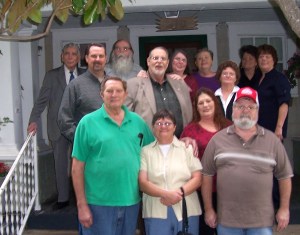
Tears turned to smiles as we took photos and exchanged hugs, then went to the church hall for more photos and refreshments – thank you, Carol and H.R., for all you did for us. Other Robertson relatives who came were Charles Stewart, Sharon Beck, and Beth James, children of Hulbert’s sister Loez, Kathryn and Lola, daughters of his sister Doris, H.R. (Hulbert Robertson) Helm, son of his sister Marie, and Gwen’s daughter Becky.

Velma Hornsby, Gwen Robertson Scoggins, and other Robertson relatives

Hulbert’s great niece Margie, a major in the Air Force, had arrived late because the general had a project for her. Even though it was short, we had a nice visit with her anyway. She was wearing her uniform to honor her uncle. As we were leaving, she went down to the cemetery to pay her respects. I’m sure he is very proud of her.

Velma Hornsby, Gwen R. Scoggins and other relatives

Velma Hornsby, Gwen R. Scoggins and other relatives

Welcome home, soldier.

2nd Lt. Hulbert H. Robertson 1943


Memories are made of this

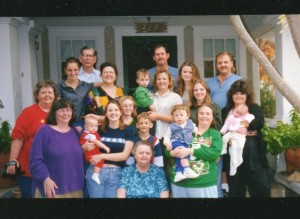
My ex-father-in-law, Charles, passed away several weeks ago, and last Saturday my youngest son and I attended a celebration of his life. I hadn’t seen my ex-mom-in-law Jean for many years, although we’ve kept in touch in recent years by e-mail. Jean is a wonderful, kind, loving woman whose life centered around her husband, children and grandchildren. She is, in today’s terms, Awesome! How many 87 year olds can send e-mail and surf the web? Almost all of her extended family was there, and it was a house full of love – and food – and noise – several of the grandchildren have children of their own now.

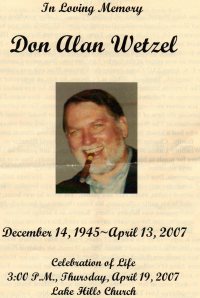
Even though I hadn’t seen many of them for years, or since the last family gathering at the funeral of my ex-husband Don, I was welcomed warmly. The kids I knew as – well, kids – are all grown up and have interesting lives and fond memories of the time when I was their aunt-in-law. Thanks, Cassie, for telling me how much that trip to Virginia meant to you.

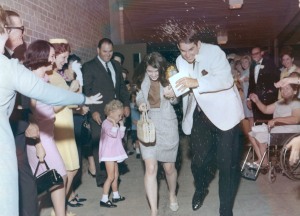
There was a slide show dating to the late 60’s and 70’s – the hair, the clothes, oh, the humanity! :-) There I was as a college coed, all 114 pounds of me, and there was our wedding day, our children, Lynn & Ed’s children … as the family grew, there was one constant – proud, happy Jean, doing the only thing she ever wanted to do, taking care of her family. Charles didn’t appear too often – Jean said he was probably on the golf course. He loved the family, but was not as expressive as she was.

Charles E. Wetzel was a good man, a man born into a family of modest means who managed, although married with 3 children, to graduate from Rice University, a school known for its difficulty and high standards. He served his country in the Army Air Corps before that. He became a very successful CPA in Houston, then retired and played golf some more. I hear he learned to cook and invited their friends for sumptuous meals. He was a talented musician, started the choir at his church and played organ for many years, and sang beautifully. His son Don got some of the musical talent – although he was better at playing the guitar than singing. Our son Jeff got the voice.

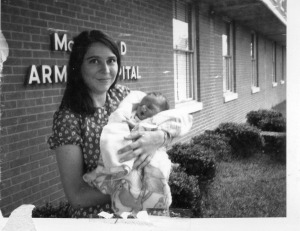
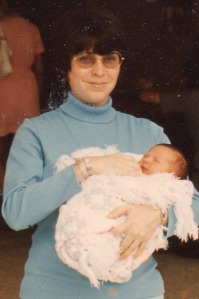
I always respected Charles, but never got to know him well. It was difficult for him to express emotion. The last years of his life were difficult, but I will always remember him as he was in my favorite photo of him. Jeff was 6 weeks old, and he was cradled in his grandfather’s arms, his eyes gazing deeply into his grandfather’s eyes, and there was so much love. Rest in peace, dear Charles

Texans Don’t Like Ike

While we were watching Gustav a couple of weeks ago, Tropical Storm Ike was reving up to cross the Atlantic and strike a killing blow on Haiti, Cuba and other spots in between Africa and the Gulf of Mexico.  This time, having learned some hard lessons from Katrina and Rita, the people of the Texas Gulf Coast starting preparing for him.  All the officials (or at least most of them) worked together to coordinate evacuations for those in the most vulnerable areas and to educate those who would “shelter in place” – get water, batteries, non-perishable food, batteries, fill up the gas tank, etc.  Most people heeded the word, but not all.  Some on Galveston Island and some coastal communities remembered the nightmare of trying to go north during Rita, stuck in traffic for days, and said they’d rather take their chances. Some said they’d never cut and run before, and they didn’t plan to now either – they stocked up on beer and bullets and waited for the fun to start.   The officials gave more dire warnings every day, as Ike grew stronger and more deadly than any storm in recent memory. They had buses to take people to shelters, they said pets could come too, but 20,000 people just wouldn’t leave.  Even when the streets of Galveston started flooding many hours before the storm hit …

I was not in an evacuation area. My son and I rode out the storm just fine.  The power was out for a couple of days, there was no gas to be found, storms and restaurants were closed, but we were okay.  We had our bottled water, our food, flashlights.  Neighbors came out after the storm and started helping each other out.  Gangs of chainsaw-toting husbands marched around the streets cutting up downed trees while the women cleaned out freezers and prepared picnics.  It was not so bad, not for us, the prudent, the prepared.

Down on the island, and on Crystal Beach and Bolivar Peninsula those who stayed and survived were lining up for ice and water and food. There was no electricity, no water, little health care, and it would be weeks before things could return to even near normal.  Some people were rescued during the storm by brave men and women who shouldn’t have had to put themselves in such danger. Some asked to be evacuated after all.  Even though the death toll is low so far, some of the communities appear to have been wiped off the map. I hope the people who lived in the houses now buried under a layer of sand were among the ones who heeded the warnings and left, but I know there were some who didn’t. The days ahead will be hard, so hard the mayor of Galveston has asked everyone who is not a part of the recovery process to leave.

Hurricane Ike – it was the best of times – neighbors working together, strangers helping those less fortunate, government agencies performing their jobs well — it was the worst of times – looting, price gouging, people who have electricity and food going to the PODs to get free stuff meant for those who don’t. We are living in interesting times.

Watching Gustav

As I was getting ready for work this morning, the weatherperson on Channel 11 said “we’re watching Gustav.” The hurricane season is heating up, and every week or two we’re watching some tropical storm or other, hoping it will just fizzle out before it gets to us. We’ve been lucky since the memorable season of 2005, when Katrina and its aftereffects messed up New Orleans and sent Houston 250,000 new citizens, and her sister Rita a few weeks later sent our area into a tizzy. Will we be lucky this season? We’re watching Gustav, just as we watched Eduard a couple of weeks ago. I still have my hurricane supplies of batteries and bottled water, canned tuna and beans, from that non-event.

There was a time when I loved hurricane season. My dad was in the Navy, and hurricanes were just part of our lives, from Key West to Charleston to Norfolk.  My siblings and I always thought it was a fine adventure, a time when Mother cooked up most of the food in the refrigerator, packed the freezer with ice, and got out the kerosene lamps.  Our  most exciting  storm  knocked a tree into our roof.  My grandparents were visiting, and I was sure they  were  having a great adventure too.  Our grownups must have been  excellent at hiding their fears, because the kids were never scared.

My dad retired and we moved to hurricane-less Dallas.  I grew up, went to college in high and dry Lubbock, and married. My husband was in the Army, and my first son was born at Ft. Eustis, near the Chesapeake Bay, during Hurricane Christine.  I watched it from my hospital window, not afraid, but not as excited as I was in my youthful innocence.  Damage was done, and people’s lives were disrupted.

I’ve been in Houston since 1974, and weathered many hurricanes and tropical storms. The worst damage we’ve had came from a mere tropical storm, Allison.  She hung around and dumped vast quantities of rain over the city.  The medical center was hit hard, and valuable lessons were learned.  One big one – don’t put your emergency generators in the basement!

The freeways were under water, 18-wheelers floating like toys in a bathtub.  Wasn’t that a storm!  Then came Katrina. Houstonians watched our neighbors suffer, and rallied to their aid, filling the Astrodome – which was nice and dry, cool, and clean, but still not home – and other shelters, filling warehouses with clothes and supplies.  Lessons were learned then too – if you’re in a danger zone, get out if you can.  Also, you can’t depend on your government to help you … We were barely done with Katrina when Rita reared her ugly and dangerous head.  She was a monster, quickly becoming a category 5, and heading straight for the Texas coast, vulnerable Galveston Island, and Houston, 50 miles inland.  What we didn’t learn from the other storms is – don’t panic, use some common sense.  If you’re in the city, 50 miles inland, as I said, let the folks on the island and immediate coast get out of harm’s way before you take to the very few highways and byways north or west.

I was watching Rita’s progress, starting Monday.  On Tuesday, non-essential staff  members were  released from work to prepare for the Big One.  I started  packing essentials, planning to go to my parents’ home in Dallas on Thursday.  By Wednesday, the roads were already jammed, and I was re-thinking that plan.  My parents were worried, but I said I’d rather wait until the roads cleared some.  They never did. You say it on tv, people sitting for hours in 100 degree heat, no water or food, no restrooms, no gas.  People got sick, and some died.  I let my friends & family know I would be sitting this one out.  My friend Judy in Connecticut said “can’t you take the train?” I had to laugh – we don’t do trains down south.

I was busy, busy busy the next couple of days, trying to figure out what was most precious so I could protect it.  Photos, mementos, my first edition signed copies of Kinky Friedman’s books … I figured the roof might come off, so I carried things downstairs. Then I considered the likely flooding, and carried it back upstairs. Then I thought, what the hell, I’ll put what I can on the stairs, put Kinky in a plastic water-tight container, and hope for the best.

As Rita drew nearer, she was downgraded to a 4. I talked to my dad, said we’d been through lots of storms like that safely, hadn’t we, and he said yes we had.  I sat up most of the night, watching the tree outside my window swaying in the wind, and by morning it was all over.

Now we’re watching Gustav. I think Kinky is still in that tote, but I better check.

Older Posts »